What’s the History Behind Horse Racing Silks?
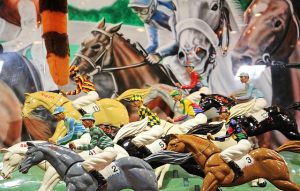 Horse racing is about speed and exhilaration but also a flash of colour.
Horse racing silks have a rich history dating back centuries. In fact, you have to go back to 17th century England. In the good old days of horse racing, the competition involved just two horses. However, identifying each horses was a challenge. For this reason owners personlised silk jackets and caps to distinguish their horse more easily. Not only did the silk help with recognition but also become a symbol of prestige.
In 18th century England, and the introduction of the Jockey Club, racing silks were established and standardised. This guaranteed that no two owners would have the same silks. Owners would choose their own designs featuring family crests, colours and designs many which are still famous to this day. The influence of horse racing silks spread across the world.
Over the years racing silks have evolved and they are now made of satin or Lycra rather than silk, which allows greater mobility.
In this modern era, horse racing silks are used for sponsorship and branding with logos. In essence, they are moving billboards and a way to generate further revenue.
The ownership of racing silks can be a valuable commodity and some have been sold at high prices. For example, Godolphin’s royal blue silks were originally in the ownership of horse trainer/owner Alan Bailey. He sold them to Sheikh Mohammed for £26,000.
Horse racing silks have evolved from their humble beginnings of identification. They are now a symbol of heritage, prestige and branding.
Which racing silks do you know? A few of my personal favourites are the lime green of John Fretwell and the crazy quilt design which literally looks like a patchwork quilt. Who could forget the silks of the late Queen, now in the ownership of King Charles III.