Which trainer and jockey combination was placed in seven consecutive renewals of the Grand National?

Despite numerous safety improvements down the years, the Grand National at Aintree can still, justifiably, be called ‘the ultimate test for horse and rider’. Indeed, many jockeys and trainers spend their whole careers attempting to win, or at least be placed in, the celebrated steeplechase. Of course, some jockeys and trainers are luckier than others, but to be placed in seven consecutive renewals, with three different horses, is no mean feat. That was the achievement of Vale of Glamorgan trainer Evan Williams and his erstwhile – now retired – stable jockey between 2009 and 2014 inclusive.

Interestingly, all three horses carried the blue and pink colours of Worcestershire owners Mr. & Mrs. William Rucker. State Of Play started the extraordinary run of good fortune for his connections by finishing fourth in 2009, third in 2010 and fourth again in 2011. Next into the Aintree unsaddling enclosure was Cappa Bleu, who finished fourth behind Neptune Collonges in 2012 and went one better when third behind Auroras Encore in 2013. Finally, completing the unlikely septet came Alvarado, who filled fourth place behind Pineau De Re in 2014 and occupied the same position behind Many Clouds in 2015.
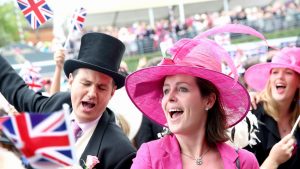
What are The Most Prestigious Horse Racing Events in England?

Recognized globally as the quintessential English pastime, horse racing is an integral part of the British culture. The spectacle isn’t just about the sport as British horse racing is synonymous with haute cuisine, sophisticated fashion statements, and A-list celebrities including members of the Royal Family.

From the Cheltenham Festival to the Royal Ascot, Britain paves the way for world-class racing events. In this list, we bring you the eight most popular and historically significant British horse racing events.

The Eight Most Prestigious British Horse Racing Events

  1. The Royal Ascot – Considered the pillar of British sporting events, the Royal Ascot is held at the Ascot Racecourse during June each year. First organized in 1839, the main event is preceded by a royal procession and is among the most sophisticated races in the country. As of 2019, the Royal Ascot boasted £7.3 million in prize money.
  2. Cheltenham Festival – The first major horse racing event in the British calendar, the Cheltenham Festival takes place in March every year. The four-day event is held at the Cheltenham Racecourse and coincides with St. Patrick’s Day, naturally attracting a large portion of Irish spectators.
  3. The Grand National – Viewed by approximately 600-million people worldwide each year, The Grand National is part of a three-day National Hunt racing event hosted outside Liverpool. Hosting an average of 150,000 people each year, the event is as colorful as it is unpredictable.
  4. Epsom Derby – Hosted for the first time in 1780, the Derby at Epsom still provides an unforgettable spectacle every year. The Downs racecourse hosts the ultimate balance between speed, endurance, and balance with three-year-old thoroughbreds navigating the unique undulations of the horse-shoe shaped track.
  5. King’s Stand Stakes – A race for the real speedballs, the King’s Stand Stakes is among the premier five-furlong events held during the Royal Ascot. Open to thoroughbreds aged three and above, the historic event came to be almost by accident. According to legend, due to horrendous weather in 1860, the distance was reduced from two miles to five furlongs and the practice remained henceforth.
  6. St Leger – Run at South Yorkshire in September, St Leger is the final Classic of the season and is hosted over one mile, six furlongs, and one hundred thirty-two yards. As the popular saying goes “the fastest horse wins the Guineas, the luckiest the Derby, and the best at St Leger”.
  7. 1,000 Guineas Stakes – The second British Classic, 1,000 Guineas Stakes is held a day after 2,000 Guineas Stakes over the same track and distance. This mile-long championship is open to horses aged three and above and was inaugurated in 1814.
  8.  2,000 Guineas Stakes – Held during early May every year, 2,000 Guineas Stakes is run over a straight mile at the Rowley Mile track in Newmarket and is open to three-year-old thoroughbred colts and fillies. Along with St Leger and the Derby, the event forms the British-triple crown.

Who is John Gosden?

Born in Lewes, East Sussex on March 30, 1951, John Gosden is the son of John ‘Towser’ Gosden and worked as assistant trainer to Vincent O’Brien, Sir Noel Murless and Andrew ‘Tommy’ Doyle, in California, before taking out a training licence in his own right in 1979. In 1983, Gosden saddled what he later described as his ‘first big winner’, Bates Motel, in the Grade One Santa Anita Handicap at Santa Anita Park and a year later won the inaugural Breeders’ Cup Mile at the now demolished Hollywood Park with Royal Heroine. All told, he trained over 500 winners in the United States before returning to Britain, to train at Stanley House Stables, now Godolphin Stables, in Newmarket in 1989.

Gosden saddled his first British Classic winner, Shantou, in the St. Leger in 1996 and his second, Benny The Dip, in the Derby the following year. In 2000, Gosden moved to Manton, near Marlbrough, Wiltshire and immediately enjoyed further Classic success, winning the 2,000 Guineas with Lahan. However, the bulk of his Classic winners, which currently number eleven, were trained at his current base, Clarehaven Stables on the Bury Road in Newmarket, to which he moved in 2006.

Overall, Gosden has won the St. Leger five times, the Oaks three times, the Derby twice and the 1,000 Guineas once. The 2,000 Guineas remains elusive but, with over 3,500 winners, including over 100 at the highest Group One or Grade One level, to his name worldwide, he is undeniably one of the most successful trainers of his, or any other, generation.

How many times was Richard Hughes Champion Jockey?

Nowadays, Richard Hughes is a respected trainer in Upper Lambourn, Berkshire, where he is following in the footsteps of his late father, Dessie, who was a much-admired jockey-turned-trainer.

However, prior to August, 2015, when he made an unexpectedly early exit from the saddle, at the age of 42, immediately after Glorious Goodwood, he had been one of the most successful jockeys for two decades. Indeed, when he finally called time on his 27-year riding career, Hughes had been Champion Jockey for the past three seasons, with 172, 208 and 161 winners in 2012, 2013 and 2014, respectively.

Unusually tall for a Flat jockey, at 5′ 10″, Hughes first moved to Britain in 1994 and rode his first Group One winner, Posidonas, trained by Paul Cole, in the Gran Premio D’italia at San Siro in September, 1995. In 2000, Hughes rode over a hundred winners in a season for the first time and, the following year, became the retained jockey to Prince Khalid Abdullah, owner of Juddmonte Farms. That association, which was to last until 2007 and yield Hughes’ first and second Group One winners, courtesy of Cartier Champion Sprinter Oasis Dream, trained by John Gosden, who completed a notable Darley July Cup – Nunthorpe Stakes double in 2003. Hughes also rode regularly for his father-in-law Richard Hannon Snr. and, following the retirement of the four-time Champion Trainer in 2013, his brother-in-law Richard Hannon Jnr..

1 118 119 120 121 122 173