The World’s Most Valuable Horse Racing Competitions

Horse racing, sometimes known as the “Sport of Kings,” has enthralled spectators worldwide for centuries. The raw power of the horses, the skill of the jockeys, and the strategic thinking of the trainers and owners come together in this thrilling sport. The most valuable horse racing competitions, which have huge prize money and rich histories, ingrained customs, and international prestige, are at the top of this sport. Horse racing competitions exist on NetBet Casino sport betting website. Some of the most valuable and well-known horse racing competitions in the world are examined in this article.

1. The Kentucky Derby

The Kentucky Derby, sometimes referred to as “The Run for the Roses,” is arguably the most well-known horse race in the country. This race, which starts the American Triple Crown, is held at Churchill Downs in Louisville, Kentucky, on the first Saturday in May every year. As of recent races, the prize purse for the Derby has increased significantly to $3 million, with a sizable portion going to the winner. The Kentucky Derby is rich in tradition, with elaborate hats, mint juleps, and singing “My Old Kentucky Home,” adding to its appeal even beyond the financial rewards.

2. The World Cup in Dubai

With a $12 million purse, the Dubai World Cup is among the wealthiest horse races globally. This race, which takes place every year at the Meydan Racecourse in Dubai, United Arab Emirates, draws elite horses, jockeys, and trainers worldwide. The Dubai World Cup, which Sheikh Mohammed bin Rashid Al Maktoum founded in 1996, has gained popularity fast by fusing opulence, spectacle, and fierce competition. The main event of Dubai World Cup Night is a sequence of races that collectively make up one of the wealthiest racing evenings of the year.

3. The Prix de l’Arc de Triomphe

The Prix de l’Arc de Triomphe, commonly known as just “The Arc,” is Europe’s most important horse racing competition. This race, which has a €5 million prize fund, is held at Longchamp Racecourse in Paris, France, on the first Sunday in October. Renowned for its demanding turf course of 2,400 meters (roughly 1.5 miles), the Arc frequently attracts the top middle-distance horses from Europe and beyond. Winning The Arc is a highly sought-after accomplishment that raises a horse’s breeding value and establishes its reputation in the global arena.

4. The Melbourne Cup

Australia’s most famous horse race, known as “the race that stops a nation,” the Melbourne Cup, takes place at Flemington Racecourse in Melbourne every year on the first Tuesday in November. It’s the richest two-mile handicap race in the world, with an A$8 million prize fund. The Melbourne Cup Carnival is a week-long celebration of racing, fashion, and entertainment, with the Melbourne Cup serving as its centerpiece. Due to its distinctive historical background, status as a public holiday, and widespread national participation, the race has become a cultural institution in Australia and has gained international recognition.

5. The Classic Breeders’ Cup

Within the two-day Breeders’ Cup World Championships, the Breeders’ Cup Classic is among North America’s most esteemed and profitable horse races. The world’s top Thoroughbreds come to the Classic because of its $6 million prize money. The Breeders’ Cup Classic, held annually at various racetracks across the United States, frequently serves as the championship race for Horse of the Year. A highlight of the international racing calendar, the event features a competitive field, high stakes, and the final race of the racing season.

6. The Saudi Arabia Cup

With a $20 million prize purse, the Saudi Cup, a relatively new race to the world of horse racing, made a name for itself as the richest horse race in the world very quickly after it debuted in 2020. The Saudi Cup is a dirt race that takes place over 1,800 meters (about 1.1 miles) and draws top horses from all over the world to King Abdulaziz Racetrack in Riyadh, Saudi Arabia. The event hopes to raise Saudi Arabia’s profile in horse racing and offer a stage for elite competition and cross-cultural interaction.

7. The Grand National

The Grand National, one of the most well-known steeplechase races in the world, is held yearly at Aintree Racecourse near Liverpool, England. The Grand National has 30 fences spread over 4 miles and 2½ furlongs and is renowned for being a challenging course and has a £1 million prize fund. With a history dating back to 1839, the race has grown to be a cherished national occasion that millions worldwide view. The Grand National is a thrilling show and a singular challenge in horse racing because of its endurance, skill, and unpredictability.

In summary

Many horse racing events provide not only significant monetary payouts but also a great deal of prestige and international recognition. These races highlight the best of the sport, attracting elite talent and enthralling spectators around the globe, from the ancient racetracks of Europe to the contemporary racecourses of the Middle East. Every race, whether the luxurious Dubai World Cup, the endurance-testing Grand National, or the tradition-filled Kentucky Derby, has a unique place in the annals of horse racing history.

Should I Bet on a Temperamental Horse?

The short answer is no.

You may ask: ‘What is a temperamental horse?’

After following two-year-old horse racing for over 30-years I’ve seen just about every type of horse. Those which behave impeccably to those that misbehave so badly they never return to the racecourse for their second start. Often they don’t even make their debut run because they are led away from the stalls because they have been difficult to handle.

A horse has three opportunities to enter the stalls. That’s three races, and if they misbehave and cannot be stalled they have to pass a test. This usually follows extensive training at the home stables. Sadly, some horses learn bad habits or are so wilful they cannot learn to behave and often they have no place in racing.

They will find another home or a different role than the one they were bred.

Each horse should be viewed on its individuality and on its merit. Every horse has its own story to tell. In their formative years there is much to learn, many changes and it is understandable that, at times, these can be overwhelming. Think back to being a young child at school. I can bet for many readers it wasn’t the easiest of times. The system insisted you walk a certain path. You weren’t allowed the option to do things your way.

There are a plethora of reasons why a horse may be difficult to handle and show temperament. It is, like us all, a combination of nature and nurture.

It’s very easy to look at a horse making its debut and not really think about its life leading to that day. Why should you consider it? You’re mostly interested in its chance of making you some money or adding a little bit of excitement to your day.

However, I think we lose something as individuals if we don’t consider the past and solely focus on the present or future. This is important for horses as much as people. It gives reason, if not justification, for the objective truth seen on a given day.

When it comes to betting on temperamental horses you are pushing your luck if you think it will end well. Not to say you will know that many horses are temperamental until after the race. Perhaps the most likely factor is a horse that’s keen or in layman’s terms pulls too hard. There are other aspects of temperament but a horse pulling for its head is one of the most common and a problem. You can often see the jockey sitting tight, reins even tighter, as the horses head turns from left to right. The jockey will do their best to get the horse to settle by restraining it. This will expend a lot of energy. Some horses pull for two or three furlongs. The likelihood of them winning is minimal. Such has been the expenditure of energy. The horse will usually tire in the closing furlongs. Sometime, a very good horse will manage to win. This is usually over the minimum distance of five-furlongs (it may be further).

The problem with a horse pulling too keenly is that it often become a pattern of behaviour. They learn this is how we race. Unless the experience of trainer and jockey can help the horse to learn to settle its future is most likely limited. Winning is hard at the best of times and wasting energy makes it next to impossible.

However, there is a chance with age and experience a horse will settle, learn, and realise its true potential. This takes time and care. It is a behaviour that horses can learn all too easy and it can be very difficult to break this habit.

Personally, I try to steer clear of temperamental horses as they usually prove to be losing bets. If a horse has disappointed because of temperament it is best not to give them a second chance (when betting) as it is very likely they will display such errant behaviour once more. Even against inferior opposition you are pushing your luck. There is little to be gained from hoping beyond hope. I would rather watch and learn.

In truth, I would rather oppose a temperamental horse, especially if they are short odds. They have an increased chance of disappointing and give additional value to others in the race.

The only exception would be that a temperamental horse is a very big price and you simply have to hope for the best.

Be careful when betting and always bet responsibly.

What is the origin of ‘nap’?

The term ‘nap’ is derived from the nineteenth century card game ‘Napoleon’, or ‘Nap’ for short. Napoleon is a simple trick-taking game, in which plays bid on the number of tricks they believe they can make, up to a maximum of five, also known as ‘Napoleon’.
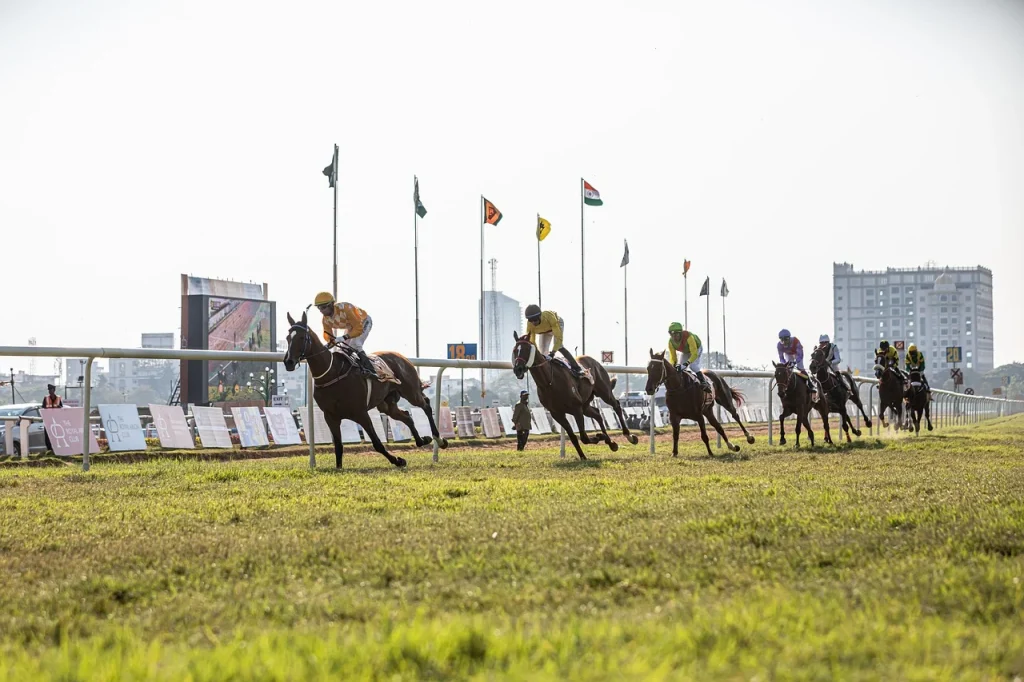
In horse racing, or greyhound racing, the term ‘nap’ is used to signify the selection that a tipster considers has the best chance of winning on a specific day or at a specific meeting on a specific day. It is important to note that ‘nap’ simply denotes the level of confidence a tipster has in a selection, based on his/her appraisal of the event in question.

So, if you follow a certain tipsters selections and they have a solid winning record with their nap of the day, it can be lucrative to place bets based on that selection. Those wagers can be either solely on the race concerned or by using the nap as a basis for attempts at doubles or trebles involving other race selections or one of the multiple other types of horse racing bets. You’ll find many of these different types of betting options explained in the GOSUBetting guide to using cryptocurrencies to bet on horse racing.

More often than not, a ‘nap’ selection may be offered at shorts odds by the bookmakers – consummate with its chances of winning, in the eyes of the tipster – but, otherwise, there is nothing more, or less, special about it than any other similarly priced selection.

Obviously, some tipsters fare better than others with their ‘nap’ selections, as can be seen from the naps tables published from time to time in the racing press. Generally speaking, though, the ‘nap of the day’ is simply the ‘headline’ tip from each tipster, one that they wish to highlight compared to their other selections of the day. They draw in punters for, say, a racing tip for that day or for a big race such as the Grand National or Cheltenham Festival. Top tipsters may become known for the success of their NAP bets. If you are a fan of race horse betting you can visit the 1xbet site.”

Which Football Stars Have a Keen Interest in Horse Racing?

Over the past few decades, we have seen a rise in professional footballers becoming more interested than ever in horse racing.

Some footballers like to attend the UK’s biggest horse racing events and bet on their favourite horse. In contrast, others have taken it a step further and ventured into the exciting world of thoroughbred horse racing ownership.

Let’s dive straight in to reveal the names of several famous footballers who have shown a keen interest in horse racing in one capacity or another.

Famous footballers [and managers] who have strong ties with horse racing

Over the past few decades, many famous footballers and former managers have been spotted at some of the UK’s biggest horse racing events, such as The Grand National, the Cheltenham Festival, Royal Ascot, and the Epsom Derby.

The five most famous faces from the footballing world who have either purchased their own horses to race at one or more of these events or have been frequently spotted in the VIP areas watch the action are the following:

1. Sir Alex Ferguson

2. Michael Owen

3. Robbie Fowler

4. Wayne Rooney

5. Rio Ferdinand

Traditionally, when most people think about placing sports bets and hear any of these names, they naturally think of football betting sites, not horse racing betting sites. However, today, more people than ever tend to think of horse racing when they hear their names.

Michael Owen

Former footballer Michael Owen has taken horse racing more seriously than any other football icon and has managed to carve out a relatively successful career for himself in the horse racing world since retiring from football in 2013.

He earned millions throughout his lucrative career as a professional footballer, having had successful spells as a striker at Liverpool, Real Madrid, Newcastle United, and Manchester United.

He used some of the millions he earned to invest in Manor House Stables – a 174-acre estate with cutting-edge facilities. Owen’s most successful time as a racehorse owner came at the 2015 Dubai Gold Cup, when his horse, Brown Panther, rode to victory.

That wasn’t Brown Panther’s only success. He also won the Irish St Ledger at The Curragh and the King George V Stakes at Royal Ascot.

Alex Ferguson

Alex Ferguson is the most successful former football manager in the horse racing world. Many of his horses are frequently seen racing at notable UK events. ‘What a Friend’ has raced several times at Cheltenham, and Harry the Viking has raced at the Grand National.

More recently, six of his horses, Protektorat, Sonigino, L’Eau Du Sud, Hitman, Il Ridotto, and Monmiral, raced at the 2024 Cheltenham Festival. Protektorat ended up winning the Ryanair Chase, much to the pleasure of Ferguson.

Monmiral, trained by Paul Nichols, also came from behind to win the Pertemps Hurdle Final.

Wayne Rooney

The former Manchester United striker has also owned a few thoroughbred horses over the past decade, although he hasn’t quite achieved anywhere near the level of success of Michael Owen and Alex Ferguson.

However, it might not be too long before we hear of Rooney’s horses winning major events like Ferguson and Owen’s horses have.

Many of you will already be familiar with several other footballers who have also shown an interest in the horse racing world, such as Ian Wright, Joey Barton, and Thomas Muller.

Other keen racegoers are Michael Carrick, Sergio Ramos, Harry Redknapp, Sam Allardyce, Jonny Evans, and John O’Shea.

Final thoughts

Some of you may have been wondering how much money it takes to get into horse ownership. The good news for some of you is that you don’t need millions lying around like these footballers. In fact, you can spend as little as £100 for a share in a racehorse.

These footballers and managers have proved that horse racing can be just as exciting and lucrative as football. The next time you tune in to watch a major UK horse racing event, don’t forget to take a closer look to see if you can see any of the names mentioned on this page.

1 39 40 41 42 43 173