Training and Care for Racing Horses: A Behind-The-Scenes Look
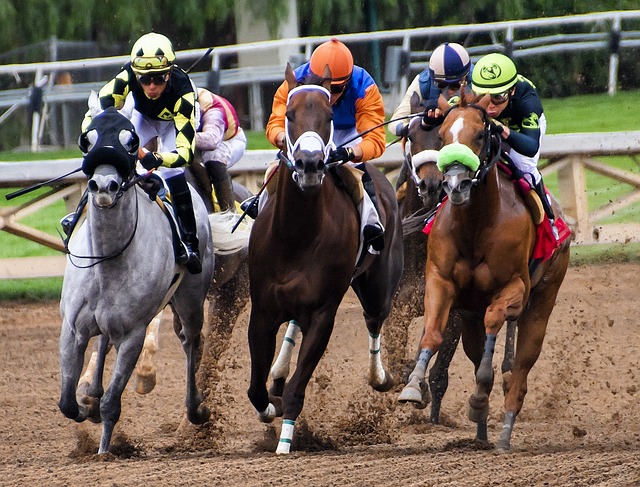
Race horses are known for their sleekness, their physique, and their overall strength and beauty and punters absolutely love the majestic of their horses and bet on the most refined and powerful horses during the race. About 100,000 registered foals are brought into the world of training and millions of race horses exist today, the English Thoroughbreds being one of the most popular ones, followed by StandradBred and Tennessee Walking Horses. Yet, only a few people are aware of the grooming and training process required to maintain these horses’ physical and mental well-being and how much care and attention is needed to preserve their fitness. Many of these premium horses, eventually race across renowned tournaments and competitions worldwide, while gambling enthusiasts use popular sites such as www.betting.co.uk to bet money on these speedy beasts. Punters who also have a love for animals can get a sneak peek at the process of caring for racing horses through the article given below.

External Well-Being and Strength

A racehorse’s agility and strength are of the utmost importance and caring for its physical health should get top priority. External well-being requires regular checkups, high-quality feeding, giving proper medicines, and looking after the overall health of the horses, especially taking special care of their limbs. As the saying goes, don’t look a  gift horse in the mouth, instead make sure it has everything it needs to succeed. Here are the following procedures that are followed to maintain the physical health of horses:

Routine Health Examinations and Veterinary Visits

Race horses have high chances of sustaining injuries from races and in some cases, the injuries may be internal and undetectable. Racing also puts the body through extreme situations and wears them out, thus, it is mandatory to conduct regular checkups for signs of fractures, internal hemorrhages, and infection sustained due to some previous injuries. It is the trainer’s job to check them daily but veterinary checkups are conducted weekly in the best places.

Special care and protection are given to hooves according to the breeds. The horseshoes are carefully fitted and protected against rusting. Additional supplements, for hoof growth and shaping of hooves, are carried out in accordance with the horses. Even the slightest lack of form and stamina could play a decisive role while competing in world-renowned racing tournaments such as the Cheltenham Festival, Saudi Cup, Grand National, etc.

Living Conditions

Cleaning the horses and providing them stables with fresh water, hygienic conditions, and temperature regulators are necessary. Horses are given well-lighted, spacious, and clean stables that are warmed in winter and cooled in summer to maintain their health and tend to their rest.

Diet

Race horses are barred from high-fat diets and fed routinely in small quantities to keep their sleek shape. The feed is strictly restricted to them before their races and it consists of fibers for better digestion. The feed is made of carbohydrate-rich items like meals of corn, oats, and barley to supply them with the high energy required by their bodies.

Stress Relief and Companion Provision

Race horses often have performativity issues stemming from loneliness or stress rather than physical ailments. Horses who are forced to race show signs of depression and anxiety; these animals tend to have a shorter life span and can turn violent if not tended to emotionally. Companion animals like cattle, goats, donkeys, or even dogs are great for horses where a herd can be created. Horses have their own set of plushies as well as support in the initial stages of their training. They also need to be taken outdoors for fresh air to get rid of the stifling feeling of stables. Creating a balanced routine and adhering to routines without changes can help the horse in the initial stages of rearing. Few care centers also opt for music therapy by playing soothing music or keeping them in a peaceful environment to detox their minds after being subjected to the blaring of races. Lastly, anti-anxiety tranquilizers are opted for as the endmost choice for horses in case they are completely distressed or have met with any accidents.

Cheltenham 2023 Top Jockeys

Jump-racing jockeys are a rare breed. These brave souls, who show no signs of fear as they navigate obstacles at high speeds, possess a unique mix of brains and brawn, not seen in any other sport.

With the Cheltenham Festival now growing ever closer, the best equine pilots in the business are readying themselves for the biggest four days of their season, so let’s take a look at some of the high-profile jockeys that will be on show in 2023.


Champion Hurdle” (CC BY-SA 2.0) by Carine06

Paul Townend

Made to wait for his big chance after being backup jockey to Ruby Walsh, Paul Townend is now reaping the rewards for his patience. Since Walsh’s retirement, Townend has won pretty much every big race that there is to win in the sport and will be fancying his chances of winning his third top jockey award in four years this year.

As you will see with most of this year’s horse racing tips, Townend will be on board a plethora of favourites throughout the week, including 7/4 Gold Cup market leader, Galopin Des Champs. With the likes of Energumene, Lossiemouth, and Facile Vega, also amongst his book of rides, another fantastic festival awaits Willie Mullins’ stable jockey.

Nico de Boinville

With Champion Hurdle banker, Constitution Hill, and the rejuvenated Shiskin among Nico de Boinville’s festival rides, the English jockey is another set to have a stellar time of it at Cheltenham.

Number one rider for trainer Nicky Henderson, de Boinville continues to show that he belongs at the top table of the weighing room, and will be hoping to grab the second Cheltenham top jockey award of his career.

Rachael Blackmore

The Queen of the jockey world, Rachael Blackmore will be hoping to emulate her past two performances at the festival. Crowned top jockey in 2021, Blackmore can look forward to continuing her high-profile partnerships with the likes of Honeysuckle and defending Gold Cup champion, A Plus Tard, although both horses have questions to be answered this year.

A lot will depend on the well-being of trainer, Henry de Bromhead’s team of horses if the leading lady rider is to enjoy more memorable moments at the festival, but if they do fail to fire, it won’t be for lack of effort in the saddle.

Davy Russell

Davy Russell is a legend of the saddle and has had a special affinity with the Cheltenham Festival throughout his career. Russell is known as a jockey that rides the Cheltenham track better than most and has consistently had winners in some of the biggest races of the week.

It has been an interesting lead-up to the 2023 festival for the 43-year-old. The Irishman announced his retirement earlier in the year, but just two weeks later he was coaxed back to action by trainer, and good friend, Gordon Elliott.

Elliott was quick to call on the experience of Russell, who will now ride the likes of, Mighty Potter, Gerri Colombe, Delta Work, Conflated, and many more at Cheltenham 2023.

It promises to be another blockbuster year at the Cheltenham Festival in 2023. Many racehorse rivalries will continue, but there will also be many battles between jockeys as they look to join an elite group of top jockeys at the meeting.

How to choose the best horse racing betting site: Betting Guide

By Anthony Tomas


You have been preparing for the big race for months; you have been tracking the favourites, studying the form and checking updates on the course conditions. Finally, you have chosen your winner and are ready to make your bet! 


The only question remaining is: where?


That can often seem like a difficult one to answer. Anyone who has watched racing on television for five minutes will know how saturated the betting market is in the UK and worldwide; the TV coverage is sponsored by one betting company, the commercial break will have adverts for five more and even the races themselves will be sponsored by other bookmakers.

They will all be offering similar deals and features, and to make matters worse, they all have similar names; BetThis or BetThat! How are you supposed to choose the right one for you?


Fortunately, guides for choosing existing and new horse racing betting sites can help you find what you are looking for!

What should I consider when signing up?

To make a bet online, either through a bookies’ website or mobile app, you will have to sign up and create an account.


This is where the saturated market is a benefit for us because the betting companies have to fight to get us as a customer. How do they do that? By offering us nice, juicy incentives for joining them.


These are usually called welcome bonuses or sign-up bonuses; they are a one-off deal that you can use after you sign up. Some companies give you a free bet to use; others give you tokens after you make your initial deposit or give you money back if your first bet loses.


Such offers can be useful regardless of the sport, but racing fans might want to pay close attention to welcome bonuses centred around the horses. A free bet or an odds boost on the weekend’s big race shows they care about racing fans and, therefore, might have more catered to you further down the line.

What about existing customers?

Proper racing fans are not going to have their annual flutter on the Grand National and never open the app again, though, are they?


Therefore, you should use a betting app that rewards your loyalty and appreciates you logging in at 13:30 on a Tuesday from Wincanton.


Make sure you consider these features when deciding where to place your regular bets.

Best Odds

Does the bookmaker guarantee the best odds? If so, put it on your shortlist.


In horse racing, odds can change by the minute. If you place a 12/1 bet on the morning of the race, the same horse could be the even-money favourite by the time they go to post.

In that situation, you obviously want those 12/1 odds, not evens! Likewise, if your horse drifts out to 20/1 and then wins, you will want those long odds. With “best odds guaranteed” you will be taking home the biggest-priced winnings; however, the market has changed.

Cashing Out

Is it clear your horse is not running his usual race today? Being able to cash out allows you to cut your losses and save a bit of stake money for your next bet.


Not all betting companies offer cash-out options, and some reserve them for other sports. A betting site that gives you this option for at least the majority of races could be worth your consideration.

Live Streaming

We hear you. You can’t always be sat in front of the TV watching the action unfold, making cashing out tricky.


Thankfully, more and more betting sites offer live streaming for customers who have made even the smallest of bets, so you won’t miss a second of the race wherever you are!


The more racing they have to watch, the higher on the list of best racing betting sites it should be.

Offers, Bonuses and Places

These should also be high on your priority list when looking long-term for your best betting friend.


What kind of things do we mean?


Some companies might offer you a free bet on the first race of the day, cash back if your horse loses or at least finishes second. Bonuses such as odds boosts are always a welcome feature, too. Such concepts are fun and make us feel valued as customers.

Each way, backers should pay attention to the places a betting company offers. If they are offering ⅕ of the odds and only three places, steer clear! Five places and ¼ odds, that’s a bit more palatable! Different races will have different place rules, but after a few uses, you will get a feel for the site’s generosity.

Money Business

Something more general but nonetheless racing fans should pay attention to is how easy it is to make withdrawals and deposits on the app or website.


Can I deposit just a few pounds? How quickly do I receive my funds after a withdrawal? Is it possible to set deposit limits so I can stay in control of my gambling? These questions are worth knowing if you want a positive online betting experience.


How exactly you can pay is also worth noting, with different payment systems such as Visa or Mastercard, even Apple Pay or Google Pay. There’s not much point in using an app that won’t accept your card!

Happy Betting!

Hopefully, these tips can help you look past the glistening ad campaigns and “too good to be true” welcome bonuses and find the best horse racing betting site for you!


Image sources:
https://pixabay.com/photos/horse-equestrian-race-4811946/

https://pixabay.com/photos/horse-horse-race-race-animal-3880450/

https://pixabay.com/photos/horses-racing-jockey-sport-rider-380420/


Which was the oldest horse to win the Grand National?

Since 2012, to qualify for the Grand National, a horse must be a minimum of seven years old. However, as any Grand National ‘anorak’ will tell you, the last six-year-old to win the world famous steeplechase was Aly Sloper, who did so in the last renewal before the race was officially suspended in 1916, 1917 and 1918 during World War I. In other words, from a punting perspective the latest change to the minimum age – which was, in fairness, made in the name of safety rather than anything else – made little or no difference to the complexion of the race.

At the other end of the scale, other qualification criteria aside, the Grand National does not have, and has never had, an upper age limit for horses eligible to participate. Consequently, even in recent years, winners at 11 or 12 years of age are by no means unheard of; in fact, since 2000, Red Marauder (2001), Ballabriggs (2011), Neptune Collonges (2012) and Auroras Encore (2013) were all 11-year-olds, while Amberleigh House (2004) was a 12-year-old.

We need to look further back in the history books to find the last ‘teenager’ to win the Grand National, 13-year-old Sergeant Murphy in 1923, and way, way back to the pioneering days of 1853, long before official returns for the race, to find the oldest winner ever. The horse in question was the 15-year-old Peter Simple, who had already won the 1849 Grand National as an 11-year-old, but failed to complete the course in 1850, 1851 and 1852, having refused at the first fence, pulled up and fallen heavily at the fence now known as ‘Foinavon’. Trained and ridden by Tom Olliver, the old boy narrowly avoided running out at Becher’s Brook on the first circuit, but regained the lead early on the second circuit and was never headed, eventually winning by 4 lengths.

1 67 68 69 70 71 173