A Quick Guide to the Major Races of the UK

Though there are many racecourses across the UK, there are three that are considered to be some of the most prestigious in the world. They are the Grand National, the Cheltenham Festival, and the Royal Ascot. We’ve put together this quick guide to help you find out more about each one.

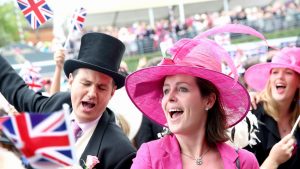
(Image Source: Pixabay)

The Grand National

The Grand National has been held since 1839. Since its inauguration, it has been held at the Aintree Racecourse near Liverpool. This is a steeplechase, that sees the horses and their riders cover approximately 4 miles and 2 and a half furlongs over the course of the race. This takes the form of two laps of the course, with the horse jumping over 30 fences.

Many of the fences are famous themselves, and fans and commentators watch eagerly to see how the horses will approach these turns. It is often considered to be an amazing display of skill to be able to handle these jumps so easily. The winner takes in the most valuable prize pot in European jump racing – with a total prize currently of £1 million.

The Cheltenham Festival

Held in Cheltenham in March each year, the Cheltenham Festival has the second biggest prize pot after the Grand National. The festival stretches over four days, and includes many different events. The oldest race still running today is the Stayers’ Hurdle. Horses must cover a distance of about 3 miles and successfully jump over the 12 hurdles of the race. This race has been running since 1912.

Cheltenham attracts many different types of racing fans to it – from those who follow the sport ardently to those who are just interested in the major races. No matter where you fall in this, check out some Cheltenham odds to gain some early insight into what might happen in the next festival.

The Royal Ascot

The Royal Meeting takes place at the Ascot Racecourse in Berkshire in June each year. Queen Elizabeth II can be found at the races at Ascot throughout the year, but it is the Royal Meeting which is often considered to be the most prestigious. This racecourse has had close ties with the monarchy of the UK since it was founded by Queen Anne in 1711.

The Gold Cup is the most prestigious of the Ascot races. It is a flat race that takes place over a distance of approximately 2 miles and 3 furlongs. This race has been taking place since 1807.

These are just three of the biggest races in the UK. You will find plenty more on the racing calendar here. You could want to learn more about racing as a whole, or you could want to focus your knowledge on the races mentioned above. Either way, you are going to be able to find lots of facts to learn about some of the biggest racing meets that the UK hosts each year. The three above will always be a great place to start.

How many fences do horses jump in the Cheltenham Gold Cup?

The Cheltenham Gold Cup is the most prestigious race of the National Hunt season and has been run, over 3 miles 2½ furlongs, on the ‘New’ Course at Prestbury Park, in Cheltenham, Gloucestershire since 1959. It’s a prime betting opportunity for serious and casual punters alike, and there are plenty of free bet opportunities on sites like freebets.ie.  Nowadays, the Cheltenham Gold Cup is the highlight of the fourth, and final, day of the Cheltenham Festival, held annually in mid-March.

The New Course is a left-handed oval, approximately a mile and a half in circumference and constantly on the turn. Although sharper than widely believed, with pronounced undulations, the New Course is essentially galloping and testing in character, with ten, notoriously stiff fences per circuit.

From the start position, horses in the Cheltenham Gold Cup jump two plain fences – which will become the second-last and last in two circuits’ time – in the home straight before continuing uphill out into the country. The fourth fence is the water jump and the fifth and seventh fences are open ditches, the first of which is jumped uphill. The uphill ditch can prove problematic as horses can see the rising ground on the landing side, which alters their perception of the fence. The second open ditch is followed by two more plain fences and a pronounced downhill run, with another plain fence, back to the point of departure.

The fence after the turn at the top of the hill, which is jumped as the ninth and nineteenth, or fourth-last, has been resited for safety purposes in the past, but still provides its fair share of incident, as does the fence on the downhill stretch; this is especially true on the second circuit, as horses come under pressure. At the end of the second circuit, horses jump the two fences in the home straight for a third, and final, time, making a total of 22 fences in all. With further knowledge of the Gold Cup course, you’re well positioned to take advantage of betting opportunities on bettingsites.ie . You’ve got to be in it to win it!

Who are Some of the Dark Horses for the 2021 Cheltenham Festival?

Even at an elite horse racing event like the Cheltenham Festival, it’s not always the favourites that win races. Sometimes, dark horses at bigger prices in the betting with bookmakers outrun their odds and pull off unexpected results.
For evidence of that, look no further than the 2020 Stayers Hurdle. The horses who finished first, second and third were all unfancied runners led home by 50/1 outsider Lisnagar Oscar, with 20/1 and 33/1 shots in-behind.

That begs the question, who are some of the dark horses for the 2021 Cheltenham Festival? Let’s take a look ahead of the four-day jumps racing extravaganza which will get underway on Tuesday, 16 March.

Dusart


The Nicky Henderson stable has made a good start to the meeting in recent years. Opening the Cheltenham Festival in the Supreme Novices’ Hurdle, a race in which he has trained the winner twice in the last five years.

Ronnie Bartlett-owned newcomer Dusart made a strong debut at Newbury; where the gelding by Flemensfirth won over Soaring Glory, who came into the race after victory at Chepstow. As he was conceding racecourse experience to most of his rivals, this horse looks a smart prospect.

He will need to make similar progress into graded races, but Dusart has already attracted market support from punters. The bookies have cut his horse racing odds for the Supreme into 16/1, while he is 25/1 for the Ballymore Novices’ Hurdle over further.

Unexcepted

Master Irish trainer Willie Mullins has saddled more Cheltenham Festival winners than anyone else. His many successes include four of the last six horses that tasted victory in the Arkle Challenge Trophy for novice chasers. Those stats make Unexcepted the subject of obvious interest in that race following an impressive bow over fences.

Owned by legendary gambler JP McManus, who was again leading owner at the 2020 Cheltenham Festival, he is a typical French import to the Mullins stable. Although, Unexcepted only ran twice over hurdles since moving to Ireland.

He jumped superbly over the bigger obstacles at Tipperary and won eased down from Entoucas. That meant Unexcepted has value for more than the winning margin of eight lengths. Granted further improvement, the 16/1 about him for the Arkle makes this one another dark horse.

Easywork


After running some fine races in Grade 1 novice hurdles last season, Easywork is another to have won his chasing debut. Like many trained by Gordon Elliott in Ireland, this horse started life over fences at two miles but should appreciate much further.

Owners of Gigginstown House Stud have a fine recent record in the Marsh Novices’ Chase with three winners including Samcro in 2020 and as many placed horses in that race since 2012. With Easywork, they have options but that two-and-a-half miles event might suit him best.

He only seemed to be going best at Navan on his chase debut when jumping the last, so further than two miles is no problem. Easywork is a 25/1 chance in the ante-post betting for the Arkle, Marsh, and RSA Chase over three miles; so he could be well worth following this season and then see where he ends up at Cheltenham.

What are The Most Prestigious Horse Racing Events in England?

Recognized globally as the quintessential English pastime, horse racing is an integral part of the British culture. The spectacle isn’t just about the sport as British horse racing is synonymous with haute cuisine, sophisticated fashion statements, and A-list celebrities including members of the Royal Family.

From the Cheltenham Festival to the Royal Ascot, Britain paves the way for world-class racing events. In this list, we bring you the eight most popular and historically significant British horse racing events.

The Eight Most Prestigious British Horse Racing Events

  1. The Royal Ascot – Considered the pillar of British sporting events, the Royal Ascot is held at the Ascot Racecourse during June each year. First organized in 1839, the main event is preceded by a royal procession and is among the most sophisticated races in the country. As of 2019, the Royal Ascot boasted £7.3 million in prize money.
  2. Cheltenham Festival – The first major horse racing event in the British calendar, the Cheltenham Festival takes place in March every year. The four-day event is held at the Cheltenham Racecourse and coincides with St. Patrick’s Day, naturally attracting a large portion of Irish spectators.
  3. The Grand National – Viewed by approximately 600-million people worldwide each year, The Grand National is part of a three-day National Hunt racing event hosted outside Liverpool. Hosting an average of 150,000 people each year, the event is as colorful as it is unpredictable.
  4. Epsom Derby – Hosted for the first time in 1780, the Derby at Epsom still provides an unforgettable spectacle every year. The Downs racecourse hosts the ultimate balance between speed, endurance, and balance with three-year-old thoroughbreds navigating the unique undulations of the horse-shoe shaped track.
  5. King’s Stand Stakes – A race for the real speedballs, the King’s Stand Stakes is among the premier five-furlong events held during the Royal Ascot. Open to thoroughbreds aged three and above, the historic event came to be almost by accident. According to legend, due to horrendous weather in 1860, the distance was reduced from two miles to five furlongs and the practice remained henceforth.
  6. St Leger – Run at South Yorkshire in September, St Leger is the final Classic of the season and is hosted over one mile, six furlongs, and one hundred thirty-two yards. As the popular saying goes “the fastest horse wins the Guineas, the luckiest the Derby, and the best at St Leger”.
  7. 1,000 Guineas Stakes – The second British Classic, 1,000 Guineas Stakes is held a day after 2,000 Guineas Stakes over the same track and distance. This mile-long championship is open to horses aged three and above and was inaugurated in 1814.
  8.  2,000 Guineas Stakes – Held during early May every year, 2,000 Guineas Stakes is run over a straight mile at the Rowley Mile track in Newmarket and is open to three-year-old thoroughbred colts and fillies. Along with St Leger and the Derby, the event forms the British-triple crown.
1 13 14 15 16 17 18