In casino games, the term ‘past posting’ refers to any instance of placing a bet after the outcome of that bet is known. The term derives from a once popular horse racing scam, in which scammers found ways to place bets on races that had already been run or, at least, to give the appearance of being able to do so. A classic example of past posting, in this sense, is demonstrated in the 1973 caper film, ‘The Sting’, starring Paul Newman, Robert Redford and Robert Shaw.
Of course this issue doesn’t apply to all casino games, such as slots, nor obviously is it something that can occur online, so when you’re playing online on Slot Strike Casino you know it’s all above board, and not the stuff of motion pictures! However, in table games, the idea of past posting is to introduce extra chips to the table, at a time at which no more bets are permitted, and thereby gain an illegal advantage.
Historically, past posting has been attempted in table games such as blackjack, craps and roulette; the technique typically involves placing chips on winning areas at a moment when the dealer is already distracted, or deliberately distracting the dealer at a crucial moment. At a crowded roulette table, for example, the dealer needs to focus attention on the roulette wheel as the ball bounces around, so may be oblivious to illegal late bets.
In blackjack, past posting is often attempted after the scammer has been paid out on a winning hand. A skilled blackjack ‘mechanic’ may place, say, a £10 bet with two £5 chips but, on payment, switch the original chips for one £500 chip and one £5 chip and claim that the dealer has made a mistake.
If you were an avid amusements arcade goer ‘back in the day’ you may well remember that exciting / naff (delete as applicable!) seaside game where you popped a few coins in and got to bet on and watch your horse take on others, with the promise of cold hard cash if you won. It wasn’t a slots game, but instead a full on track with cheap looking plastic horse figures. I’m not exactly talking it up, and let’s just say that the first reference to it online when I did a search was on a website called World of Crap. But even with that being the case, nostalgia kicks in when I think back to those halcyon days.
Technology has moved on an awful lot since that marvellous monstrosity though, and it’s done so in the area of slots faster than just about any other. A casual visit to sites like Avenger Slots Casino immediately reveals fun and addictive horse themed games such as Bronco Spirit (look out for those shiny gold horse coins!) and Mustang Gold. These slots game are perfect for those with a love of horses and combine that aesthetic with all of excitement of playing slots. There are no doubt horse themes slot machine in real life too, but I can’t say I’ve ever been lucky enough to chance upon one, so I’ll opt for couch potato mode instead .
We’re in a time where the racing season has now started again (thank god!) and Royal Ascot is just around the corner too. With that in mind, why not kill some time on these or other horse slots, and even other themed slots game, while you’re waiting for the big races to hit our screens. If your luck is in, it might boost your betting bank for when you see a generously prices outsider, or dead cert! Whatever your approach to slots and betting is, have fun and good luck!
On Saturday 4th April 2020, the national hunt spectacle that is the Aintree Grand National will once again be taking place. Televised on ITV at 5:15pm, with coverage beginning at 2pm, the nation will surely collectively be on the edge of their seat to watch this, the pinnacle of UK racing. A who’s who of racing excellence will be on display with the countries best jockeys, trainers, owners and of course horses all having one aim in mind, to cross the line in first place and become part of the history of this great race. Before long we’ll all be selecting our Grand National 2020 tips, via our own individual approaches, be that anywhere from tipsters to tea leaves!
The Grand National is a race that’s held such longevity that it’s given us everything over the years. Breathtaking back-to-back wins (Red Rum, Tiger Roll), ambitious outsiders, battling displays. The Grand National of course has also seen it’s fair share of examples of, if you will, defeat stolen from the jaws of victory. Jockey’s taking their foot off the gas too early, leading horses falling when they had the win in the bag, the list goes on. Perhaps the biggest, and some would say strangest (or most mysterious!) upset was the defeat in the Grand National of the Queen Mother owned Devon Loch.
In 1956, Devon Loch suffered what was later described as ‘the most tragic defeat in Grand National history’, but exactly what happened to him remains a mystery that endures to this day. What definitely did happen was that, 40 yards from the finish line, with the race at his mercy, Devon Loch suddenly and inexplicably fly jumped – that is, raised his forelegs as if to jump – before slithering to the ground in an unceremonious belly-flop, right in front of his owner, Queen Elizabeth The Queen Mother, who was watching from the Royal Box. Jockey Dick Francis attempted to recover, but all chance had gone and ESB, ridden by Dave Dick, galloped by to win by 10 lengths.
Various theories have been put forward as to the cause of the demise of Devon Loch. One of the most popular is that, in the same way that horses occasionally fly jump at road crossings on National Hunt racecourses, Devon Loch caught sight of the water jump, or at least its shadow, on his inside, and instinctively tried to jump it. Francis, though, believes that Devon Loch was overwhelmed by the noise of the crowd – newsreel footage of the incident does, indeed, show the horse pricking his ears immediately beforehand – and, consequently, his hind-quarters refused to act.
It’s certainly an odd affair and one that stands out, even among all of the Grand Nationals that have come and gone over the decades. This unusual piece of sporting history has been viewed close to a million times on YouTube, which ironically make Devon Loch more of a household name than many of the actual Grand National winners from that era. A strange and unlikely chapter in the history of the event. I wonder if the 2020 race will bring any unexpected outcomes? We’ll soon find out!
The very simple answer to this question is yes they can. A successful racehorse can win a great deal of prize money during its career. But that’s not the end of its ability to make cash for its owners. Once a racehorse has retired, it can go to a stud farm and be even more financially lucrative.
Success follows in the family
When you next check out the form of a horse you fancy backing with the bookmakers, don’t just look at how they got on in their last race or two. Look at the breeding because that is an important part of horse racing. It’s the same in other sports. For example, the England cricket team has Stuart Broad and Johnny Bairstow, both whose fathers also represented cricket. The phrase ‘it’s in the genes’ is one to use here. A successful horse can breed others that will follow in its footsteps and have highly profitable careers.
Most of the horses that enjoy success over the flat only race for a few years before retiring. After winning big races, their stud value will rise. Rather than going on for another year and perhaps tarnishing their reputation, owners can retire them and send them off to the stud farm.
Top stallion on and off the track
Sea the Stars is a prime example of how much money can be made at stud. His career is regarded as one of the most successful stallions ever. Wins came in the 2000 Guineas, the Derby and the Eclipse Stakes. A win in the Prix de l’Arc de Triomphe followed, but it wasn’t a great surprise that he was so successful. Sea the Stars is a half-brother to Galileo who also won the Derby and both are sons of Urban Sea who won the Arc.
With that kind of family history and success on the track, it’s no surprise that there’s a big queue at stud for Sea of Stars. He’s expected to cover (so much nicer than saying ‘have sex with’) at least 100 mares a year.
The owner of the mare currently must pay $150,000 (around £115,000) for this to happen, but if a successful horse is bred, that could turn out to be a fantastic piece of business. His racing career saw Sea the Stars earn just over £4m, so his time at stud is going to raise a considerably higher amount. He could be covering mares for well over a decade!
Tiger on a Roll
It’s not just horses that race over the flat that can go to stud. Tiger Roll has won the last two Grand Nationals. He bids for a historic hat-trick this year. He’s the current 5/1 Grand National favourite at many of the bookies, who know a thing or two about a horse’s pedigree. If he does win the National again, it’s likely to be the end of his career and he could well head off to stud to make even more money for his owners.
Frankel keeps on delivering
You don’t have to be a winner of the Derby or the Arc to make millions at stud. Frankel bagged just under £3m in a career that saw him win all 14 of his races. His victory in the 2000 Guineas was one of ten Group 1 race wins. Frankel was never tried at the mile and a half distance of the Derby but by the time he retired, had become the horse with the highest ever rating. No wonder a figure of $175,000 (£135,000) can be charged at stud. He’ll make far more money off the track than he ever did on it.
Those fees can increase in time if the resultant racehorses go on to be successful. That’s been the case with Sea the Stars with several classic winners being bred. 2014 saw Taghrooda win the Oaks and the King George VI and Queen Elizabeth Stakes. The 2016 Derby was won by Harzand whose sire was Sea the Stars, so going to stud and paying to have your mare serviced by Sea the Stars can be well worth it.
Current stars can do the same
A horse such as Anthony van Dyck (who also has Galileo as his sire) who won the 2019 Derby can be expected to head off to the stud farm when retiring and make even more money.
The current favourite for this year’s 2000 Guineas is Pinatubo, just 11/10 at and 6/1 to win the Derby. Unbeaten last year in five races, he was rated the best two-year-old in 25 years. A successful career as a three-year-old would see his stud farm value rocket. So, when you back top horses this year, don’t be surprised if, in a few years, you’ll be backing their offspring at the bookies, too.
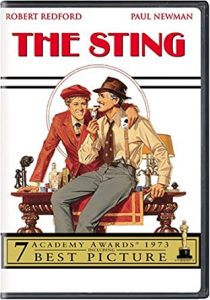 In casino games, the term ‘past posting’ refers to any instance of placing a bet after the outcome of that bet is known. The term derives from a once popular horse racing scam, in which scammers found ways to place bets on races that had already been run or, at least, to give the appearance of being able to do so. A classic example of past posting, in this sense, is demonstrated in the 1973 caper film, ‘The Sting’, starring Paul Newman, Robert Redford and Robert Shaw.
 If you were an avid amusements arcade goer ‘back in the day’ you may well remember that exciting / naff (delete as applicable!) seaside game where you popped a few coins in and got to bet on and watch your horse take on others, with the promise of cold hard cash if you won. It wasn’t a slots game, but instead a full on track with cheap looking plastic horse figures. I’m not exactly talking it up, and let’s just say that the first reference to it online when I did a search was on a website called World of Crap. But even with that being the case, nostalgia kicks in when I think back to those halcyon days.