Who is Richard Rowe?

Nowadays, Richard Rowe is best known as dual-purpose, although predominantly National Hunt, trainer, based at Ashleigh House Stables in the rural town of Storrington, on the northern edge of the South Downs, in West Sussex, South East England. Rowe campaigns a modest string with, by design, less than 30 horses in training at any one time. Indeed, he has spoken of the difficulties involved in keeping his operation financially viable in the past. Rowe enjoyed his most successful campaign, numerically, in 1992/93 , which was just his second season in the training ranks, when he saddled 23 winners from 167 runners, at a strike rate of 14%.

However, in recent years Rowe has found winners much harder to come by. Since 2011/12, he has not saddled more than five winners in a season and, in November 2023, made headlines when Ask Her Out – his only success of 2023/24 so far – sprang a massive 150/1 surprise at Lingfield, thereby bringing to an end a seven-month dearth of winners for the yard. Recent winners may have been few and far between, but earlier in his training career, Hampshire-born Rowe recorded several notable big race wins. At Graded level, he won the European Breeders Fund ‘National Hunt’ Novices’ Handicap Hurdle Final at Cheltenham in April 1997 with Sir Dante, the Whitbread Gold Cup Chase at Sandow Park in April 1999 with Eulogy and, most recently, the Dovecote Novices’ Hurdle at Kempton Park in February 2000 with Hariymi.

Born in the town of Bordon, East Hampshire, on November 11, 1959, to a racing family, Rowe joined the late Joshua ‘Josh’ Gifford at his yard in Findon, West Sussex, as a stable lad, in 1976. He rode his first winner, Retaliation, at Stratford-upon-Avon on May 13, 1977, but got his big break – albeit under wretched circumstances – when, in July 1979, stable jockey Bob Champion was diagnosed with testicular cancer and immediately began a pioneering, but, in his own words, ‘barbaric’, programme of chemotherapy, which would prevent him from race riding for over a year. Champion, of course, returned to the saddle to score a ‘fairytale’ victory on Aldaniti in the 1981 Grand National, but, when he finally retired in 1982, Rowe took over as stable jockey at Findon.

By that stage, Rowe had already won the Anthony Mildmay, Peter Cazalet Memorial Chase (now the London National) at Sandown Park on Modesty Forbids in 1980 and the Whitbread Gold Cup, at the same venue, on Shady Deal in 1982. He would go on to forge a hugely successful association with Gifford for the best part of a decade and, by the time of his retirement from the saddle in early 1991, he had amassed a total of 554 career winners. The last of them was Super Sense, trained by Gifford, in the February Novices’ Hurdle at Sandown Park on February 2, 1991.

As a jockey, Rowe also won back-to-back renewals of the SGB Handicap Chase (now the Ascot Silver Cup) in 1985 and 1986 on Door Latch, owned by octagenarian Jim Joel. Burdened with 11 stone at Aintree, Door Latch was sent off 9/1 third-favourite for the 1986 Grand National, with the official racecard of the day stating, ‘…if he took to the fences he would have an outstanding chance.’ Sadly, he clearly didn’t, parting company with Rowe at the very first fence. In happier times, Rowe also won the Coral Golden Hurdle Final (now the Pertemps Network Final) on Pragada and the Grand Annual Chase on Vodkatini, both in 1988, the Mildmay of Flete Chase on Paddyboro, in 1989, and the Tote Gold Trophy (now the Betfair) on Deep Sensation, in 1990.
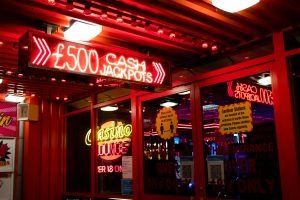
Stars and Their Love for Gambling

bonusCasinos and sports betting have long been associated with glamour, excitement, and high stakes, attracting individuals from all walks of life, including some of the world’s most renowned celebrities. These glittering venues have served as a backdrop for legendary performances, dramatic encounters, and, of course, some rather flamboyant gambling stories. In this article, we dive into the world of celebrity casino tales, shedding light on why these establishments hold such allure for stars and sharing some of the most captivating anecdotes.

The Magnetic Appeal of Casinos for Celebrities

Casinos offer a blend of anonymity and spectacle, a combination that is particularly appealing to celebrities. Within the opulent walls of top-tier casino resorts, stars can indulge in the thrill of gambling while enjoying the highest standards of hospitality and entertainment. The luxury settings, high stakes, and the rush of risk-taking provide a potent cocktail of excitement that many celebrities find irresistible.

Moreover, casinos often roll out the red carpet for their famous patrons, offering them exclusive gaming areas, complimentary stays in lavish suites, and personalised service. This level of pampering and attention to detail enhances the appeal of casinos as leisure destinations for the rich and famous.

Famous Personalities and Their Casino and Sports Betting Adventures

Ben Affleck: A Passion for Poker and Blackjack

Hollywood actor Ben Affleck is well-known for his love of card games, particularly poker and blackjack. His skill at the poker table is renowned; in 2004, he won the California State Poker Championship, taking home a substantial prize. However, his blackjack exploits have also made headlines, particularly an incident where he was reportedly banned from playing the game at a major Las Vegas casino due to his exceptional card-counting abilities.

Frank Sinatra: The Chairman of the Board and His Casino Ties

Frank Sinatra’s association with casinos, particularly those in Las Vegas, is legendary. Not only did he perform at various casino venues, but he was also an avid gambler himself. His influence in Las Vegas was so profound that he had a casino named after him, the Sinatra at the Encore. Sinatra’s love for gambling was part of his larger-than-life persona, intertwining his legacy with the history of Las Vegas entertainment.

Charlie Sheen: High Stakes and Headlines

Charlie Sheen’s gambling exploits are well-documented, with reports suggesting that he once spent a significant amount of money on sports in a single week (Drake is also known for this… I wonder if he’s ever had a flutter at a UK race course?). His penchant for high-stakes gambling added to his controversial public image and made headlines alongside his other escapades. While Sheen’s gambling activities have been a source of media fascination, they also highlight the potential risks and downsides of celebrity gambling habits.

Gladys Knight: The Empress of Soul’s Gambling Journey

Gladys Knight, known for her hit songs and powerful voice, has openly shared her struggles with gambling addiction. Her memoir reveals how baccarat and blackjack tables captivated her, leading to a period where gambling became a significant part of her life. Knight’s story is a candid reminder that the glamour of casinos can sometimes mask the challenges of gambling addiction, even for the most successful individuals.

Conclusion

Casinos continue to be popular leisure destinations for celebrities, offering a mix of excitement, luxury, and privacy. The allure of gambling, coupled with the high-roller experiences that a land based casino or a mobile casino provides, makes these venues irresistible to many stars. While the tales of celebrity gambling often highlight the glamorous side of casino life, they also serve as reminders of the importance of gambling responsibly. Whether it’s the triumph of a poker championship or the cautionary tale of addiction, celebrity casino stories provide a fascinating glimpse into the intersection of fame, fortune, and chance.

How fast are racehorses?


A thoroughbred racehorse typically gallops at around 30 miles per hour, on average, but, according to the Guinness Book of World Records, the fastest speed ever recorded was 43.97 miles per hour, by Winning Brew, a two-year-old filly, who covered two furlongs at Penn National Race Course, in Pennsylvania, USA in 20.57 seconds on May 14, 2008. Of course, the minimum distance over which thoroughbred horses race, in Britain, is five furlongs; the record over that distance belongs to Stone Of Folca, a four-year-old gelding, who achieved an average speed of 41.9 miles per hour when winning at Epsom Downs Racecourse, in Surrey, UK on June 2, 2012, in a time of 53.69 seconds.

Are there effective Front Running Betting Systems?

There are plenty of betting systems.

Some work, some don’t, some draw level. However, there is a system that works very well for some horse racing tipsters. I can’t say I’ve ever used such a system as it could be considered unethical. Although, I do think it is a similar approach which we see in traders on Betfair. It’s kind of following the money. If you following the money, by betting money on it too, you are pretty much guaranteed to make a profit. The only person who gets their fingers burned are those who get in too late and the money dries up. In essence, everyone is a winner apart from those who get caught short and just too slow (It’s there own fault, hey.)

It’s a similar story for other successful racing tipsters. They have such a massive following (because they have been very successful) that just about any horse he tips will be backed, often substantially so. If Eddy (we will call him) was good enough to send the tip to you first you would be sure to make money. You could lay your stake for a free bet or lay the complete bet to a profit. For example, if you bet £100 on a 10/1 shot and it was backed to 5/1 you could lay off to make £50. Not a bad bet if you could get 50% profit on your bets especially if you could do that throughout the year. The beauty of this approach is that it doesn’t matter if the horse won or lost.

I don’t know if there are many tipping services that work with such a method but I guess there are. It is a very good way to make money.

The front running betting system is one such formula. Where you build a reputation, a giant following, and then bet on your horse whether big or short odds and ten minutes later release the information (the tip) to the first batch of subscribers. If you have wave after wave of information sent to your subscribers you could almost guarantee that the majority would be winning too by betting and laying for a profit. It’s the power of the subscribers. If you could attract plenty of new subscribers to follow your tips but keep them in the last release of the tip you can be sure that the other tiers will be making money. Just think if you could achieve this system. How much money would a subscriber be willing to pay for that advantage? It would be completely unethical but you can see how it could work. The beauty of selling racing tips where most of the punters/subscribers win even if the horse loses. It could finish stone last and you’d see punters with a smile on their face.

I’m pretty sure on the betting exchanges this is one of the trading methods and the reason why you see horses backed or drifting to the exception of all others.

I say it’s like a pyramid scheme. Keep fanning the flames and as long as you aren’t the last one betting you may make a profit. Just tell the next punter: ‘Keep betting money on this horse and we will all be winners. It’s as simple as that.’

There must be many approaches which rely on punters following suit. There is a power in numbers and it can be used to manipulate the market. It is an interesting thought. I’ve never been involved in anything like this because if orchestrated in such a manner it would be unethical if no bordering on fraud. However, if most are making money then no one is going to question it. They justify their actions.

In this case front running betting is about betting first and telling your followers to bet second or thereafter.

It’s an unethical money spinner but a feature of many market.

Only for those sitting at the head of the table are guaranteed a profit.

Who cares about the others (they say) it’s market forces.

1 42 43 44 45 46 173