Early favourites for Roland-Garros

As we approach the start of the French Open, otherwise known as Roland-Garros, anticipation is building amongst tennis fans for the second Grand Slam of the year. Two weeks of intense competition in Paris as the tournament is set to return at maximum capacity for the first time since 2019 due to the coronavirus pandemic. Last year’s 125th anniversary, held behind closed doors, saw Novak Djokovic reign supreme as part of his memorable year, but with the Serbian absent from the Australian Open back in January, this year’s competition is all to play for.

It certainly looks to be a close affair when checking the odds to win Roland Garros 2022, with a plethora of candidates after a first Grand Slam of the year and others looking for that maiden title on the Parisian clay. With that in mind, let’s take a look at some of the early favourites for this year’s French Open.

Carlos Alcaraz

Let’s start with the recent Madrid Open winner Carlos Alcaraz. At just 19 years old, the Spaniard is looking like the next big thing in the world of tennis, and with victories over Djokovic and Alexander Zverev in his home country, there’s every reason to believe this good form will carry over to Paris. Set to rise to sixth in the world Alcaraz will garner much of the attention in his opening games, with even Djokovic singing his praises after victory in Madrid.

“He definitely is special,” he said. “Already he’s breaking a lot of records as a teenager, winning two Masters events this year, a couple of 500s. So far he’s the best player in the world, no question, this year with the results that he’s been doing.”

Rafael Nadal

Sticking to the theme of Spaniards, there’s a reason Rafael Nadal is tipped as the favourite for the tournament. Having suffered so many injuries, the ‘King of Clay’ Nadal will be eager to return to build on his Australian Open success with another Grand Slam victory at Roland-Garros.

The only concern the 35-year-old will have is if his body can maintain itself throughout the duration of the tournament. A rib injury forced him out of the Indian Wells and missing both Monte Carlo and Barcelona, Nadal will want to come back with a bang and replicate the kind of performance he put in against Daniil Medvedev back in January to really establish himself as one of the sport’s best once again.

Alexander Zverev

Fresh off the back of defeat in Madrid, there’s no reason to suggest why Alexander Zverev can’t put things right at Roland-Garros. The 25-year-old is yet to get over the line in a Grand Slam but having reached the semi-final in Monte Carlo and the quarters in Miami, there’s every reason to believe he can reach the latter stages in Paris. Zverev will need to work on his temperament though, with his blast at the ATP scheduling not doing him any favours heading into a tournament of such magnitude.

Novack Djokovic

With so many accolades to his name, it’s impossible to overlook Djokovic, despite his form this year. The 20-time Grand Slam winner was cleared to play in the tournament after his vaccine status meant he was unable to defend his Australian Open title — eventually won by Nadal. Djokovic beat Greek Stefanos Tsitsipas in last year’s final after coming back from two sets down, and he’ll need to channel that kind of performance if he is to retain his title in this year’s Roland-Garros.
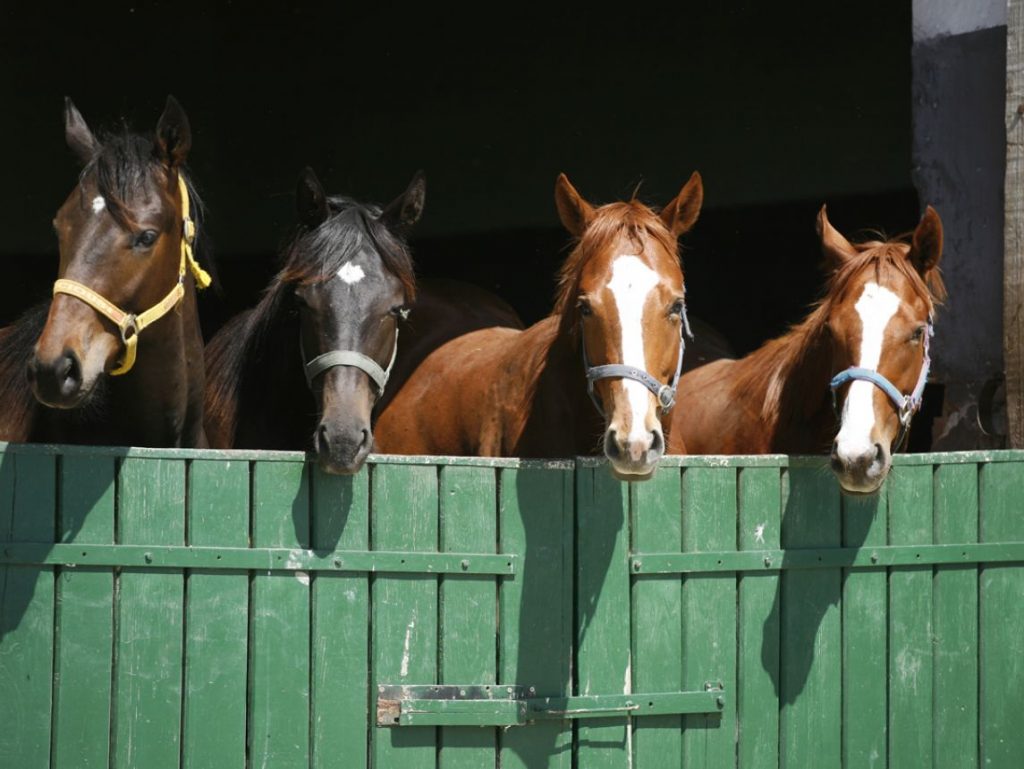
 

The Most Interesting Horse Racing Facts

If you are a horse racing fan, then you may think that you know everything about the sport – but do you? You may well head over to and find the best odds at Smarkets sportsbook; armed with the knowledge of the race and the racers involved. But what do you actually know about the sport itself? Here, we will look at some of the most interesting facts about horse racing throughout the years.

Horse Racing is an Ancient Sport

When we say it’s an ancient sport – we really mean ancient. In fact, it dates all the way back to approximately 4,500 BC when the nomadic tribesmen in Central Asia – the men credited with the domestication of horses) started racing them for a bit of competitive fun. However, it wasn’t until 1,000 BC that the Ancient Greeks started chariot racing. This sport became popular all over the world, being adopted by the Romans and Egyptians.


Moving forward a few hundred years, to 664 BC, it was in the 33rd Olympiad that horseback racing was confirmed as an official sport – and it was then that the riders were named ‘jockeys’. It was the Romans who brought the sport to Britain, during the common era – and the sport has flourished ever since.

Horse Racing Reached America in the 1600s

It wasn’t until the mid 1600s that the sport of horse racing reached the shores of America – and the very first US racecourse was constructed in Newmarket, in colonial America. The most distinguished racehorses were transported over from England and bred, with more hybrid foals born and raised, becoming champions.


As time passed, the popularity of the sport grew and by the end of the 1800s there were more than 300 tracks open in the US. In the 1900s, horse racing had ups and downs. The century started with the Great Depression and so a number of the states opted to legalise horse racing betting to help the economy. In 1945, after the end of WW2, horse racing popularity was on the decline and it didn’t improve again until the 1970s. It was the introduction of the Triple Crown that resparked American interest.

Horse Racing Owes its Survival to Betting

Since the beginning of horse racing, people have been putting bets on the winner. It is betting on the outcome of the race that draws most people into the world of horse racing. It’s also for this reason that it remains one of the most popular sports across the globe to this day.


At the start of the 20th century in the US, there was very much an anti-gambling stance – and many states outlawed horse racing betting. This came close to completely killing off the sport. However, thanks to the emergence of the Triple Crown – consisting of the Kentucky Derby, the Preakness Stakes and the Belmont Stakes, it started to regain its popularity again.

Thoroughbred Racehorses Cannot be Given a Random Name

If you look at the horse racing cards, you are bound to see plenty of strange and seemingly random names. However, you might be surprised to know that there is actually a lot of thought that goes into naming a thoroughbred racehorse. The breed registry for Canadian and US thoroughbreds, the Jockey Club, sets out a series of guidelines that need to be followed when naming a racehorse.


If you have purchased a thoroughbred that you are in the process of naming, then you are able to submit a maximum of six names to the Jockey Club, which they can decide from. However, rules stipulate that they have to be shorter than 18 characters in length – which includes spaces and punctuation. It is also prohibited to name your horse after a famous racetrack as well.


This is a sport filled with historical and interesting facts. From the age of the sport to the fact that every thoroughbred is considered one year older on January 1, there are many facets of horse racing. This is what has ensured that it has remained popular for thousands of years – and why people continue to enjoy watching and betting on the sport of kings.

Royal Ascot’s Biggest Surprise Winners

It’s always an emotional moment watching a horse fly past the finishing post, but even more so when it’s a horse that – according to the bookmakers – stood no chance of winning.

While the experts do generally get it right, every now and again a brilliant performer slips through the net. Whether it’s a winner with huge odds, a newcomer to the sport, or a jockey performing near miracles, each time is heart-stoppingly exciting.

Here are some of the most notable moments when the bookmakers and crowds alike were genuinely surprised at Royal Ascot.

Frankie Dettori and his Magnificent 7 (1996)

Not all of the winners on the card at the September Ascot meeting in 1996 were long odds, the chances of just one man winning every single race were slim to none. However, on the 28th of September 1996, Frankie Dettori would prove himself as he had so many times before. Defying the odds, he went on to win all seven races on the card.

His first ride was on Wall Street, a fitting name for the number 1 horse in a lineup that would cost the betting industry more than £30million. Wall Street went off at 2/1 odds, making him the favourite for the Cumberland Lodge Stakes.

Next was Diffident, going off at 12/1 after a string of poor results. A slowly run Diadem Stakes went in his favour though and Dettori stole that win as well.

Mark of Esteem, Decorated Hero, Fatefully and Lochangel all snagged wins in the following races, leaving Dettori going into the last with a record-breaking day at stake.

Fujiyama Crest was the horse that everybody’s dreams rested on; the BBC even interrupted its usual coverage to show footage of on-course bookmakers slashing the price of Fujiyama Crest in anticipation of Dettori’s win.

They were right to do so, as Fujiyama Crest just held on to take the win. He lived until 2015 as the Dettori family’s pasture ornament.

Nando Parrado at the Coventry Stakes (2020)

One of the biggest-priced winners ever and certainly the biggest-priced winner of recent years was Nando Parrado. He failed to impress on his first time out at Newmarket but when it came to the 2020 Coventry Stakes, he had Frankie Dettori on board. As we now know, that ought to have given eagle-eyed punters a clue about his potential.

At odds of 150/1, it would certainly have been worth cashing in one of the Royal Ascot free bets offers that are so prevalent around the time of the festival.

Since then, Nando Parrado hasn’t gone on to win again, despite having a handful of near successes in – amongst others – several Group 2 races.

This record at Coventry earned him a place at the Irish National Stud though, so it’s possible that some of his progeny might follow in his footsteps at Royal Ascot in the not-too-distant future.

Fox Chapel at the Britannia Stakes (1990)

Before Nando Parrado, Fox Chapel held the record of the longest-odds winner at Royal Ascot, having set off at odds of 100/1. Looking back, those odds seemed pretty inviting even though there was seemingly no chance of Fox Chapel winning.

Before the Britannia Stakes, Fox Chapel had only won a single maiden race against just two other colts. While a win is a win, he couldn’t repeat the same feat during his next three outings -despite trainer Richard Hannon trying everything within his power to squeeze a win out of the horse.

Hannon sent him around three different racecourses to see if there was a direction he preferred to run in, even going to Windsor’s unique figure-of-eight course. He put four different jockeys up, including an apprentice claiming 7lb to see if the weight would make the difference.

He tried a step up from 6 furlongs to 7 furlongs and then a further step up to 1m2furlongs. Nothing worked; Fox Chapel it seemed, didn’t want to win.

Despite this, owner Tony Budge wanted his horse to be entered in the 1990 Royal Ascot. When he made the cut for the Britannia Stakes, Budge was elated. While he did make it in, Fox Chapel was a pound away from the handicap, so a 5lb claimer jockey was put aboard.

The extra weight seemed likely to play against him, as did the unfamiliar course length (the Brittania Stakes is run over 1 mile) and the unusually soft track. Despite all this, Fox Chapel somehow bolted to the front and stayed there, finishing first past the post and making Budge’s dreams come true.


What Clues Did Guineas Weekend Give Us for Epsom?

The opening two British Classics of the season were won by Coroebus and Cachet, as they prevailed in the 2,000 Guineas and 1,000 Guineas respectively.

Attention now turns to Epsom for the Oaks and the Derby in June. Here is a look at whether the races at Newmarket gave us any clues for the next two Classics.

Front Three from 2,000 Guineas

Very Highly Regarded

It was a 1-2 for Godolphin and trainer Charlie Appleby in the colts’ race on Guineas weekend. Both Coroebus and Native Trail represent two very exciting horses for their connections for the rest of the year.

Coroebus and Native Trail don’t have a Derby entry so are set to remain at 1m. The horse which finished third behind them, Luxembourg is expected to appear at Epsom. He is the 2/1 favourite in the horse race betting for the contest.

As shown in the horse racing results, Luxembourg made his seasonal reappearance at Newmarket and his trainer Aidan O’Brien was delighted with his horse’s performance. He is now set to head straight to Epsom without another appearance before then.

Unlike the two horses who finished ahead of him at Newmarket, Luxembourg is expected to improve for the extra half a mile at the Surrey venue. He is a son of Camelot who won the most prestigious British Classic in 2012.

Last season’s Vertem Futurity Trophy winner stayed on well in the 2,000 Guineas. He just did not have the speed to match the two horses who looked very good over 1m. If successful at Epsom, he will give his trainer his ninth success in the race, extending the record he already has.

Tuesday on Course for Oaks

This year’s 1,000 Guineas was won by Cachet. She prevailed in the Nell Gwyn Stakes over 7f earlier in the campaign and there were some doubts about whether she would see out the 1m trip in the Classic for the fillies, but she did so bravely from the front end of the field.

Neither Cachet, nor the runner-up Prosperous Voyage, have an entry in the Oaks. They are likely to feature next at Royal Ascot in June in the Coronation Stakes, a race over 1m for fillies. That’s also an event where Inspiral is likely to return to action, after last season’s star two-year-old missed the Newmarket contest due to a setback.

Tuesday did her Oaks claims no harm with a third-place run in 1,000 Guineas. The Irish horse was two lengths behind Cachet when she crossed the finish line. She plugged on strongly inside the final couple of furlongs to run into one of the placings.

The daughter of Galileo is the 7/2 favourite to win the Classic for fillies at Epsom. She has featured just three times in her career, so remains open to improvement.

The Oaks and Derby are scheduled to take place on the 3rd and 4th June respectively, in what are always two of the biggest days of racing on the Flat calendar in the UK.

1 82 83 84 85 86 173